
Every plan begins with a complimentary consultation. We'll match the right treatment to your skin.
Or call (919) 333-4418
Thermal-mechanical skin resurfacing for all skin types. No lasers, no needles, no social downtime.
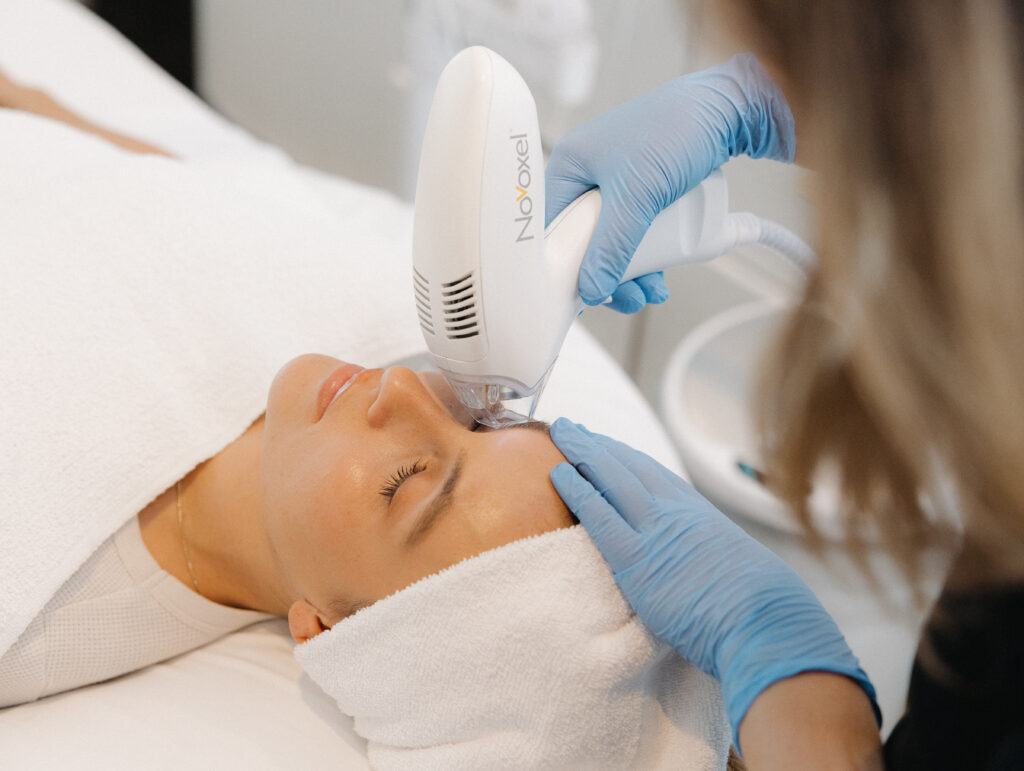
At The MedSpa at Raleigh Plastic Surgery Center, we offer Tixel® thermal-mechanical resurfacing to improve the appearance of uneven skin texture, fine lines, acne scarring, and select signs of skin aging.
Tixel is a non-laser skin resurfacing treatment that uses controlled thermal energy to stimulate the skin’s renewal process. By delivering heat through a specialized titanium tip, Tixel creates a precise fractional thermal effect that supports skin remodeling and improves the appearance of the treated area.
For clients seeking smoother-looking skin, improved texture, and a more refined complexion, Tixel offers a customizable approach to skin resurfacing. Treatment settings are selected according to your skin concerns, treatment area, and desired level of resurfacing.
At The MedSpa, your treatment plan is personalized to your skin and goals, with an emphasis on appropriate treatment selection, realistic expectations, and comprehensive aftercare.
Interested in Tixel skin resurfacing? Schedule a consultation at The MedSpa in Raleigh, NC, to determine whether this treatment is right for you.
Tixel is a professional skin resurfacing device that uses Thermo-Mechanical Action (TMA®) technology to deliver controlled heat to the skin through brief contact with a heated titanium tip.
Unlike traditional laser resurfacing, Tixel does not use light energy. Instead, its specialized tip transfers thermal energy directly to the skin, creating a controlled fractional treatment effect. Depending on the selected settings, treatment can produce different levels of thermal stimulation and resurfacing.
This process activates the skin’s natural healing response and supports tissue remodeling. As the skin recovers, improvements may develop in the appearance of texture, fine lines, and other selected skin concerns.
Tixel treatments can be customized to address different levels of skin resurfacing. Your provider will determine the appropriate treatment approach based on your skin, medical history, and desired outcome.
Tixel may be recommended for clients looking to improve the appearance of:
The suitability and expected results of Tixel vary according to the concern being treated, treatment settings, and individual skin characteristics. Some pigmentation conditions require particular caution, as thermal treatments can sometimes worsen pigmentation in susceptible individuals.
Tixel is designed to improve the appearance and quality of the skin through controlled thermal stimulation and resurfacing.
Following treatment and recovery, clients may notice improvements in skin texture, the appearance of fine lines, and the overall smoothness of the treated area. The degree of improvement depends on the original concern, the treatment intensity, and individual healing.
Collagen remodeling and skin renewal occur gradually, so results may continue to develop over the weeks and months following treatment. A series of treatments may be recommended to achieve more noticeable improvements, particularly for textural concerns or acne scarring.
Tixel is not intended to eliminate every scar, wrinkle, or pigmentation concern. Your provider will discuss realistic expectations and whether complementary treatments may be appropriate for your goals.
The recommended number of Tixel treatments depends on your skin concerns, treatment intensity, and desired results.
Some clients may benefit from a series of treatments spaced several weeks apart, while others may require a different approach depending on the area treated and the degree of resurfacing needed.
Your provider will establish an individualized treatment plan and determine the appropriate interval between sessions. The skin must be allowed to recover adequately between treatments.
Your Tixel appointment at The MedSpa begins with an assessment of your skin, a review of your goals, and a discussion of the expected benefits and recovery.
1. Skin assessment and preparation
Your provider evaluates the treatment area, reviews your medical history, and determines whether Tixel is appropriate for you. The skin is cleansed, and numbing may be used depending on the treatment settings and your provider’s protocol.
2. Tixel resurfacing
Your provider applies the Tixel handpiece to the designated area using a controlled pattern. The heated titanium tip makes brief contact with the skin, delivering thermal energy in a fractional pattern. You may experience warmth, a prickling sensation, or temporary discomfort during treatment.
3. Immediate post-treatment response
After treatment, the skin may appear red and feel warm or sensitive. Depending on the settings used, small pinpoint marks or areas of micro-crusting may develop as the skin begins to recover.
4. Recovery and skin renewal
Your skin gradually heals over the following days. As recovery and remodeling continue, improvements in texture and the appearance of selected skin concerns may become more noticeable. Your provider will guide you on aftercare and whether additional sessions are appropriate.
Downtime after Tixel varies based on treatment intensity, the area treated, and your individual healing response.
After treatment, temporary effects may include:
With lighter treatments, visible redness may settle relatively quickly. More intensive resurfacing can involve several days of visible recovery, and in some cases longer. Do not assume that all Tixel treatments have the same downtime.
Your provider will explain what to expect based on your specific treatment settings. Plan your appointment around your recovery needs, particularly if you have an upcoming event or extended sun exposure.
Following your provider’s aftercare instructions is essential for protecting the skin and supporting healing.
General recommendations may include:
Your provider will give you individualized instructions based on the intensity of your treatment and your skin’s response.
Tixel does not rely on light energy targeting melanin, which may make it an option for a range of skin tones. However, it should not automatically be considered suitable for every skin type or every pigmentation concern.
The risk of post-inflammatory hyperpigmentation and other complications depends on factors such as skin tone, medical history, active skin conditions, treatment settings, and individual healing. Darker skin tones and clients with a history of pigmentation changes may require additional precautions and careful treatment selection.
A professional assessment is important to determine whether Tixel is appropriate for your skin and which treatment settings are suitable.
Tixel may be an option for adults seeking to improve skin texture, select fine lines, and other visible signs of skin damage or aging.
Not everyone is a suitable candidate. Active skin infections, open wounds, certain inflammatory skin conditions, a history of abnormal scarring, recent procedures, and other medical factors may affect eligibility.
Your provider will review your medical history, evaluate the treatment area, and discuss potential risks, benefits, and alternatives before recommending treatment.
At The MedSpa, we take a personalized approach to skin rejuvenation. Our goal is to match treatments to your skin concerns, treatment preferences, and long-term skin quality goals.
From your initial assessment through treatment planning and recovery, our team prioritizes thoughtful recommendations, clear education, and appropriate aftercare.
If you are considering Tixel skin resurfacing in Raleigh, NC, we invite you to learn more about this treatment and whether it may be appropriate for your skin.
Ready to get started? Contact The MedSpa at Raleigh Plastic Surgery Center to schedule a consultation.
No. Tixel uses Thermo-Mechanical Action technology to transfer heat directly to the skin through a heated titanium tip. It does not rely on laser or light-based energy.
Comfort varies depending on the treatment settings, treatment area, and individual sensitivity. You may feel warmth, prickling, or brief discomfort. Your provider can discuss whether numbing is appropriate for your treatment.
Recovery depends on the intensity of treatment. Redness and warmth may settle relatively quickly after lighter treatments, while more intensive resurfacing can cause several days of redness, roughness, or pinpoint crusting.
Some changes in skin appearance may become noticeable after the initial recovery period. Improvements can continue over subsequent weeks and months as the skin remodels. Individual results vary.
Good For
Tixel may be suitable for all Fitzpatrick skin types, but individual candidacy depends on skin tone, pigmentation history, treatment settings, and provider assessment
Downtime
Downtime typically ranges from 1–3 days for lighter treatments, with redness, warmth, and mild swelling immediately after treatment. Tiny grid-like marks or micro-crusting may develop and can take several days to resolve. More intensive treatments may require longer recovery.
Frequency
A series of 3 treatments is recommended, with sessions typically spaced 4–6 weeks apart to allow the skin to recover between treatments. Your provider will determine the appropriate treatment interval based on your skin concerns and treatment intensity.
Licensed, credentialed and genuinely invested in your results — we take the time to understand your skin before we ever recommend a treatment.
Come see us in Raleigh — or tell us about your skin goals and Madison, our patient coordinator, will schedule your complimentary consultation.